


Home Page Hero Banner
Actions

What you do matters. Make it count.
What you do matters. Make it count.
Centered Text
Actions
GROWN WITH PURPOSETM is a forward-thinking agronomic program that assesses your farm’s planning, use of crop inputs and safe work practices. Since the program launched in 2019, local Co-op Grow Team members have been working closely with farmers like you, developing customized strategies that improve fertilizer efficiency, optimize production and enhance the overall health of the land.
Centered Video
Actions
Growing with Precision
We challenged ourselves to demonstrate visually when a Western Canadian crop is grown with precision and care. Watch how we used modern tools, advanced strategies and local support to grow something unique.
Three Text Cards
Actions
Why Farms GROWN WITH PURPOSE Are Different

Targeted crop input strategies aim to improve return per acre.
Use only what the crop needs, where it needs it.

Balance productivity with long-term land stewardship.
Image Text
Actions
Evaluate On-Farm Practices
A comprehensive review of your planning, use of crop inputs and safe work practices will identify strategies to improve performance.

Image Text_2
Actions
Plan for Continual Improvement
Build a crop plan that drives nutrient-use efficiency and other performance metrics. Set benchmarks and establish short- and long-term goals to optimize production and profitability as well as soil health. Start small, see results and expand strategies to increase nutrient efficiency and crop performance year after year.
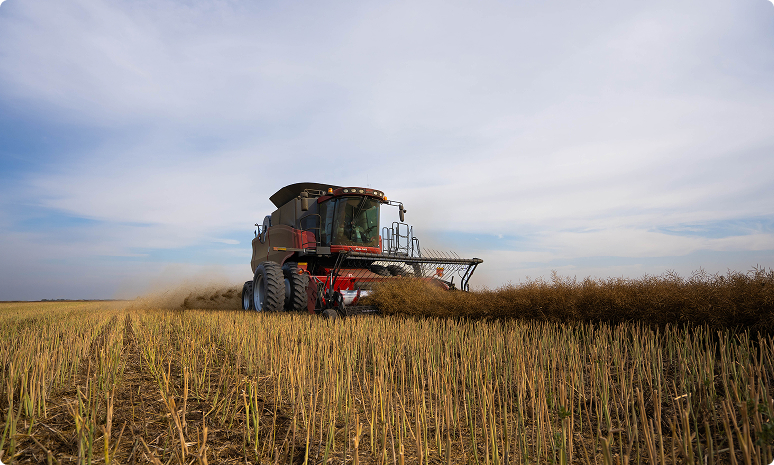
Image Text_3-EI
Actions
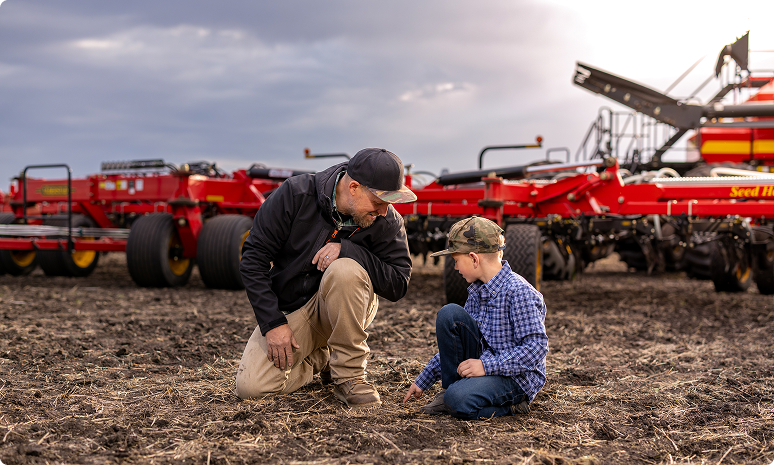
Demonstrate Leadership in Farm Stewardship
Show your community — and consumers — that your crops are GROWN WITH PURPOSE™: they’re produced with practices that are mindful of air, soil and water quality.
Centered Text_1
Actions
Six Signs You Are GROWN WITH PURPOSETM
- A nutrient-management plan is developed each year based on a field-by-field or even zone-by-zone basis. Consideration is given to the soil type, organic matter, previous crop, potential residual nutrient carryover, yield goals, crop type and soil test results.
- Soil testing is used to determine the amount of nitrogen available and informs how application rates by field or zone can be tailored, ensuring that just the right amount of nitrogen is applied to achieve the targeted yield while minimizing potential losses.
- Nitrogen is applied at a time that reduces environmental losses including volatilization. For example, when nitrogen is applied to dry soils that do not seal, there is nitrogen loss through volatilization. This nitrogen loss to the atmosphere is not only costly, but it is no longer available to the crop.
- Enhanced efficiency fertilizers are used to reduce nitrogen losses through volatilization or denitrification and limit the amount lost between application and crop uptake.
- Legume or pulse crops are included in the rotation as they capture or fix nitrogen from the air and return it to the soil for next year’s crop.
- Minimum till or no-till farming practices are used which prevent wind and water erosion that transport nutrients from fields to watersheds.
Banner
Actions
Ag - Social Bar
Actions

